
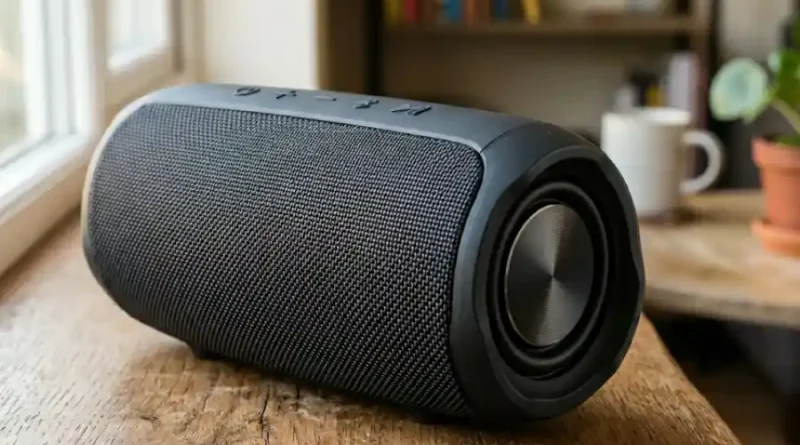
Bluetooth Speaker with Deep Bass: What Most Buyers Get Wrong and How to Pick the Right One
You know that feeling when a song drops and the bass hits your chest like a drum? That is what a great Bluetooth speaker with deep bass can do. It does more than play music. It makes you feel it. But here is the problem. Most people spend good money on a speaker, bring it home, crank it up, and think, “Wait. This sounds nothing like the reviews said.” The bass is weak, hollow, or just plain fake. And they have no idea why.
This guide is going to change that. We are going to talk about how deep bass works, what to look for before you buy, the mistakes most buyers make, and which speakers genuinely deliver. By the end, you will know what to get and why.
Why Deep Bass Feels So Different from Regular Sound
Most sounds you hear go straight to your ears. Bass does something different. It moves through the air in long, slow waves. At low enough frequencies, your whole body picks up on it. You feel it in your chest, your stomach, and even the floor under your feet. That is why hip-hop hits harder at a concert. That is why action movies feel more intense in a good theater. The bass reaches past your ears. You feel it.
A regular Bluetooth speaker can handle voices, guitars, and high-pitched sounds pretty well. But deep bass is much harder to reproduce. It needs more air movement, more power, and smarter engineering. That is why cheap speakers always sound thin. They are not built for it.
What Creates Deep Bass Inside a Speaker
Before you spend a dollar, it helps to understand what you are buying. This is how bass works inside a speaker, put simply.
Driver Size
The driver is the round speaker cone that moves back and forth to create sound. Bigger drivers move more air. More air movement means deeper bass. A small driver the size of a coin cannot produce the same low-end thump as a driver the size of your palm. This is why large speakers almost always have more bass than tiny ones.
Passive Radiators
This is where modern engineering gets clever. A passive radiator is a second cone inside the speaker that does not have its own motor. It just vibrates along with the main driver. This extra vibration extends the bass deeper without needing extra power. Many of the best compact speakers use two passive radiators, one on each side, to produce bass that sounds like it belongs in a much bigger unit.
Enclosure Design
The shell or body of the speaker is called the enclosure. A well-built, airtight enclosure lets bass build up properly inside before it comes out. A cheap or poorly sealed enclosure lets the sound leak in all the wrong ways, resulting in bass that sounds muddy or thin.
DSP and Digital Bass Boost
Many speakers today use software called Digital Signal Processing, or DSP. This is the speaker’s internal brain. It can raise bass frequencies, reduce distortion, and adjust sound in real time. Features like JBL’s bass boost button, Sony’s MEGA BASS, and Soundcore’s BassUp technology all use DSP. When done right, it sounds impressive. When done poorly, the bass sounds artificially bloated rather than naturally deep.
Quick fact: Real deep bass comes from good physical engineering. Digital bass boost can make it louder, but it cannot replace proper driver size, passive radiators, and a solid enclosure.
5 Things to Check Before You Buy Any Bluetooth Speaker for Bass
1. Frequency Response (The Lower, The Better)
Every speaker lists a frequency response range, like 60Hz to 20kHz. The first number tells you how low the bass can go. The lower that first number, the deeper the bass. Here is a simple guide:
- Below 40Hz: Exceptional bass. You will feel it, not merely hear it.
- 40Hz to 60Hz: Good bass. Solid punch and thump for most music.
- 60Hz to 80Hz: Average bass. Fine for casual listening but lacks depth.
- Above 80Hz: Weak bass. Better for voices and podcasts than music.
2. RMS Wattage, Not Peak Wattage
Wattage tells you how powerful a speaker is. But there are two types listed on most product pages. Peak wattage is the highest power the speaker can hit for a split second. RMS wattage is the steady, continuous power it delivers all the time. Always look at the RMS number. A speaker that advertises 60W peak but only delivers 20W RMS will sound underwhelming the moment you push the volume.
3. Passive Radiators
If you want deep bass in a compact speaker, look for one with at least one passive radiator. Two is even better. This feature is a strong sign that the engineers cared about bass quality and went beyond software tricks alone.
4. Driver Count and Size
More drivers and larger drivers generally mean better bass. A speaker with a single 2-inch driver will never compare to one with dual 4-inch woofers. Check the specs. If the listing does not mention driver size, that is often a sign the manufacturer does not want you to know.
5. App EQ Controls
A speaker with a companion app that offers a proper equalizer gives you control over how much bass you want. This is especially useful because bass response changes depending on the room you are in. Brands like JBL, Soundcore, and Sony all have apps with EQ sliders that let you fine-tune the sound to match your space and taste.
3 Buying Mistakes That Almost Everyone Makes
Mistake 1: Trusting Peak Wattage Numbers
A speaker that says “100W” in big letters on the box can sound weaker than a well-built 30W speaker. Marketers know that higher numbers sell. But peak power means almost nothing for everyday listening. Always dig for the RMS figure. If only one number is listed and the brand won’t clarify, be cautious.
Mistake 2: Ignoring the Size of the Room
A speaker that sounds incredible in a small bedroom may get swallowed alive in a large living room or a backyard gathering. Bass needs air to develop. In open outdoor spaces, a small speaker loses its low-end almost completely. Match the speaker’s power output and size to where you plan to use it. For outdoors or big rooms, go bigger.
Mistake 3: Judging Bass at Low Volume in a Store
Store demos almost always play music at moderate volume. But bass truly shows itself at medium-to-high volumes. A speaker can sound warm and full at 40 percent volume and then turn muddy and distorted at 80 percent. If possible, test the speaker at higher volumes before buying. Or rely on reviews from trusted audio sites that test at various volume levels.
How Placement Can Make or Break Your Bass
This is something almost no one tells you, and it is completely free. Where you put your speaker matters enormously for bass. Here are placement tips that can make a noticeable difference without spending a single extra cent:
- Place it near a wall: Walls reflect low frequencies back into the room. Putting your speaker 6 to 12 inches from a wall can noticeably deepen the bass.
- Use a hard surface: Placing your speaker on a hard table or countertop helps it project better. Soft surfaces like sofas or beds absorb bass energy.
- Avoid corners (mostly): Corners can push the bass up quite a bit, but they can also make it muddy and uneven. Try it and see if it sounds clean or boomy for your specific speaker.
- Keep the battery above 30 percent: Most speakers reduce power output when the battery runs low. That means less bass, softer volume, and compressed sound. Charge before any long listening session.
Best Bluetooth Speakers with Deep Bass in 2025
Here are the top picks based on real audio testing and expert reviews across the SERP, organized by use case:
Best Overall: JBL Charge 6
The JBL Charge 6 is one of the most well-rounded speakers available right now. It delivers strong, punchy bass with clear mids and highs. It has an IP68 waterproof rating, a 7-band EQ in the JBL app, and a powerful battery. The passive radiators on both ends are visible and genuinely functional. This is the speaker to get if you want deep bass with no compromises on build quality or portability.
Best for Parties: JBL PartyBox 310
If you want to shake a room, the PartyBox 310 delivers 240W of output power with dual woofers built for thumping low-end. It includes RGB lighting, a bass boost button, a graphic equalizer, and even microphone and guitar inputs. It is not a portable carry-around speaker. It is a party machine, and it does that job better than almost anything else at its price.
Best Premium: Marshall Kilburn III
The Marshall Kilburn III brings 50 hours of battery life, physical tone controls on the speaker body, and a rich, warm bass profile that feels refined rather than aggressive. It is built for music lovers who want quality over raw power. The bass is deep and controlled, not overblown. The retro design is a bonus.
Best Value: Soundcore Boom 2
If you want serious bass without spending a lot, the Soundcore Boom 2 is almost impossible to beat. It features BassUp 2.0 technology, 24 hours of battery life, an IPX7 waterproof rating, and RGB lighting. It punches well above its price range and regularly goes on sale for under $90. This is the one to get if budget is the main concern.
Best Mid-Range: Sony XG500
The Sony XG500 features dual woofers, passive radiators, and Sony’s MEGA BASS mode. It is carry-friendly, hits frequencies as low as 45Hz, and does not distort easily at moderate volumes. It sits in a great middle ground between compact portability and real bass performance.
What Genre of Music Benefits Most from Deep Bass
Not every type of music needs punishing low-end. Here is a quick breakdown to help you match your speaker to your taste:
- Hip-hop and R&B: Deep bass is essential. Look for speakers that reach below 50Hz with strong sub-bass presence.
- EDM and electronic music: Bass drops are the whole point. You need both depth and speed from the bass. A speaker with passive radiators handles this well.
- Rock and metal: You want punchy mid-bass more than sub-bass. A balanced speaker with a tight low-end works better than one tuned purely for boom.
- Pop and country: A well-rounded speaker is fine. Deep bass is not critical but still adds warmth.
- Movies and TV: Sub-bass matters a lot for explosions and dramatic scenes. Speakers like the PartyBox 310 or Sony XG500 make a huge difference here.
Frequently Asked Questions
What makes a Bluetooth speaker have deep bass?
Deep bass comes from a combination of driver size, passive radiators, a well-sealed enclosure, and enough wattage to drive the sound cleanly. Software features like bass boost modes help too, but real deep bass starts with good physical engineering.
Is bigger always better for bass in a Bluetooth speaker?
Mostly, yes. Larger speakers can move more air, which naturally produces deeper bass. However, some well-engineered compact speakers with dual passive radiators can outperform larger but poorly designed ones. Size matters, but smart design matters just as much.
Can I improve the bass on my current Bluetooth speaker without buying a new one?
Yes. Try placing it closer to a wall, on a hard surface, and at mid-range volumes rather than maximum volume. Use the EQ settings in the companion app if available, and make sure the battery is well charged before listening. These simple changes can make a real difference.
What does passive radiator mean, and why does it matter for bass?
A passive radiator is an extra cone inside a speaker that vibrates along with the main driver without its own motor. It extends bass depth and makes compact speakers sound much fuller. If you see passive radiators listed in the specs, that is a good sign for bass quality.
How much should I spend on a Bluetooth speaker with deep bass?
You can get genuinely good bass from speakers starting around $80 to $100 (like the Soundcore Boom 2). Mid-range options between $150 and $300 (like the JBL Charge 6 or Sony XG500) offer noticeably better performance. Premium options above $300 (like the Marshall Kilburn III) offer refinement and build quality but not necessarily more bass than the mid-range picks.
Does Bluetooth connection quality affect bass performance?
It can. Older Bluetooth versions can compress audio and reduce sound quality slightly. Bluetooth 5.0 and newer, combined with codecs like AAC or aptX, deliver better audio quality with less compression. For most people listening to streaming music, this is not a huge difference, but it is worth noting if you are after the best possible sound.
The Bottom Line
Finding a Bluetooth speaker with deep bass does not have to be a guessing game. Now you know what creates bass (driver size, passive radiators, enclosure design, and RMS power), what numbers to look at (frequency response, RMS wattage), and what mistakes to avoid (trusting peak watts, ignoring room size, testing at low volume only).
The best speaker for you depends on how and where you listen. A portable pick like the JBL Charge 6 covers most situations beautifully. If you want to shake a room, the PartyBox 310 is the answer. On a budget, the Soundcore Boom 2 delivers more than it has any right to at its price point.
Whatever you choose, place it well, keep it charged, and match it to your room. Do those three things, and the bass you have been looking for is already there waiting for you.